Match Burnt Peanut Red
Benjamin Moore Burnt Peanut Red is a deep, low-reflectance shade, warm in character with an LRV of 12. The matches below are ranked by ΔE, a perceptual color-difference score.
View full Burnt Peanut Red color page →

Closest matches across every brand
One match per brand, ranked by ΔE — a perceptual color difference score calculated from Lab color space values. Lower is closer. Click any card to compare side by side in simulated rooms.

Their light reflectance is nearly identical (LRV 12 vs 12), so neither reads brighter in a room. A ΔE of 1.8 means the difference barely reads in a finished room.


With LRVs of 12 and 12, the two reflect almost the same amount of light. At ΔE 2.4 you'd need them side by side to tell them apart.

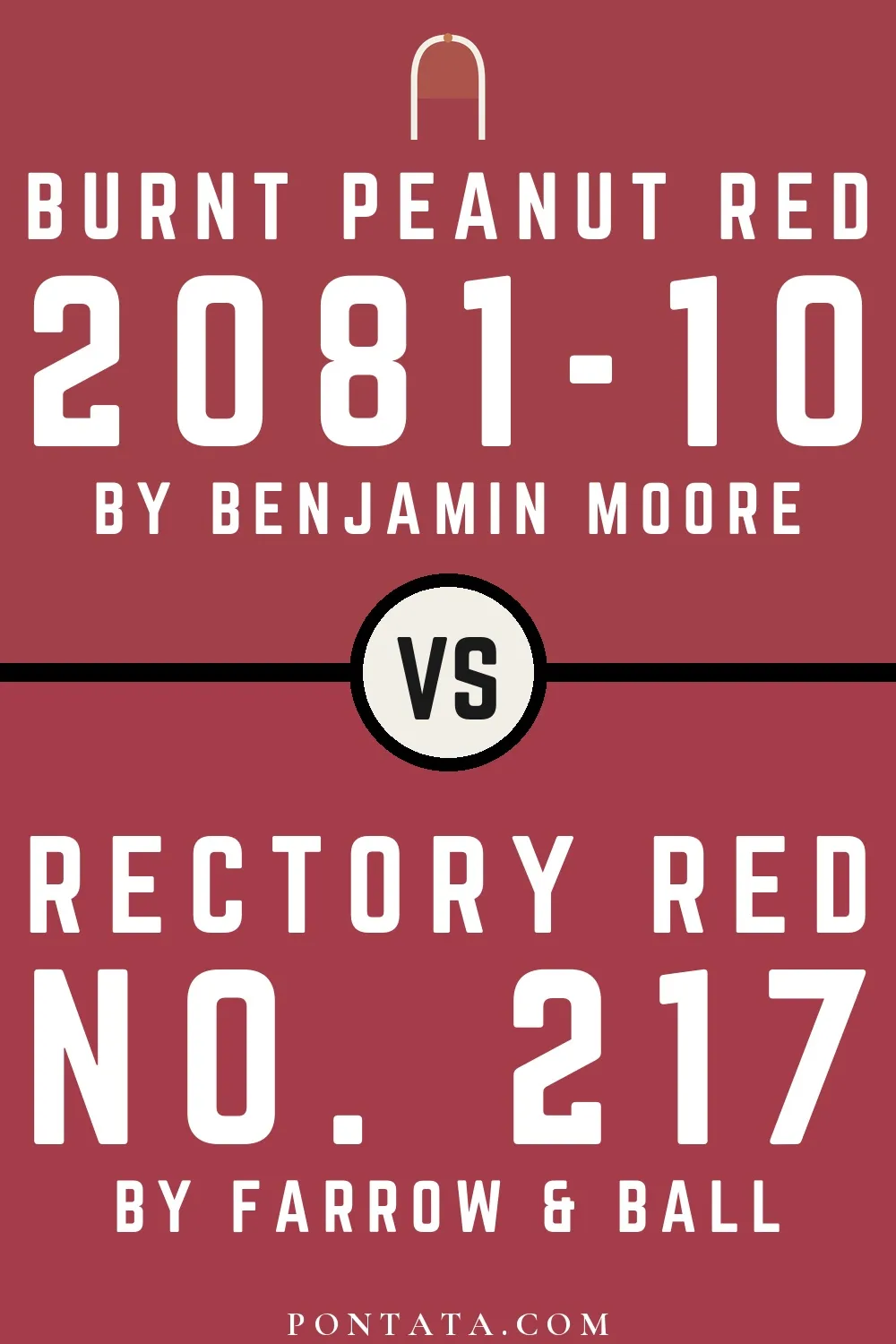

With LRVs of 12 and 11, the two reflect almost the same amount of light. At ΔE 3.4 they're clearly different, yet close enough to share a room.


With LRVs of 12 and 11, the two reflect almost the same amount of light. At ΔE 3.8 they're clearly different, yet close enough to share a room.


Their light reflectance is nearly identical (LRV 12 vs 12), so neither reads brighter in a room. The ΔE 4.0 gap is real but not dramatic — distinct as a choice, harmonious together.


With LRVs of 12 and 10, the two reflect almost the same amount of light. At ΔE 5.1 they're clearly different, yet close enough to share a room.


With LRVs of 14 and 12, the two reflect almost the same amount of light. At ΔE 5.4 they're clearly different, yet close enough to share a room.


Their light reflectance is nearly identical (LRV 12 vs 11), so neither reads brighter in a room. The ΔE 6.4 gap is real but not dramatic — distinct as a choice, harmonious together.


With LRVs of 12 and 12, the two reflect almost the same amount of light. At ΔE 10.2 these are two genuinely different directions, not variations on a theme.

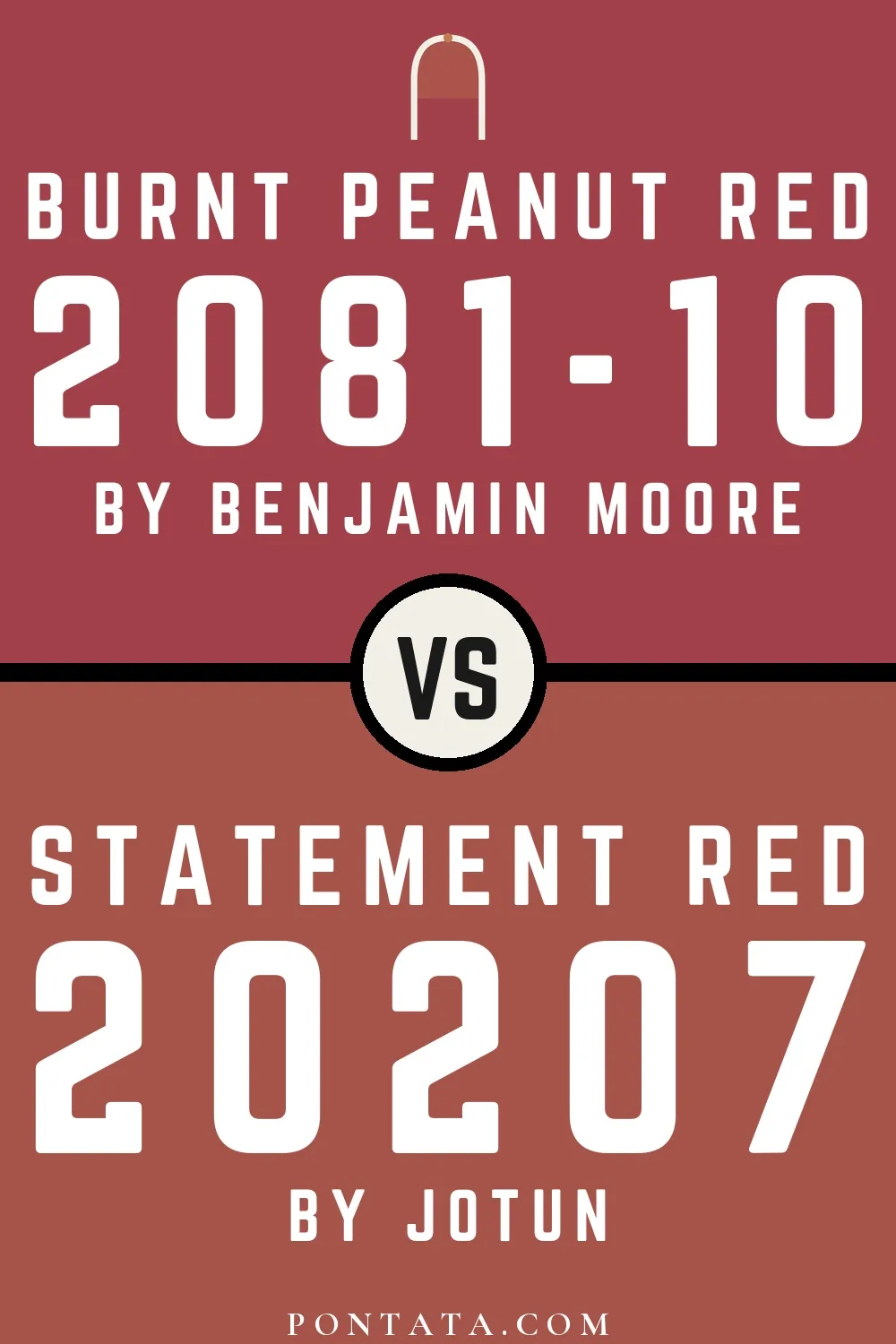

Their light reflectance is nearly identical (LRV 15 vs 12), so neither reads brighter in a room. A ΔE of 10.9 puts them firmly in different territory — a strong contrast if combined.


A 5-point LRV gap (12 vs 7) makes Burnt Peanut Red the marginally brighter of the two. A ΔE of 11.6 puts them firmly in different territory — a strong contrast if combined.


A 4-point LRV gap (16 vs 12) makes Nectar the marginally brighter of the two. A ΔE of 12.8 puts them firmly in different territory — a strong contrast if combined.


A 5-point LRV gap (12 vs 7) makes Burnt Peanut Red the marginally brighter of the two. A ΔE of 14.4 puts them firmly in different territory — a strong contrast if combined.


Their light reflectance is nearly identical (LRV 13 vs 12), so neither reads brighter in a room. A ΔE of 14.7 puts them firmly in different territory — a strong contrast if combined.