
Conch Shell
At first glance, Conch Shell belongs to the beige family; in a room, light and context can make it far more elusive. Its warm classification can bring a gentle glow to the color, particularly beside natural wood and softer whites. 10 generated visualizations explore how the color might shape a finished room.
Hex
#F8E6D7LRV
81.24
Conch Shell in Rooms
Follow Conch Shell from one space to another and watch how light, scale and surrounding materials reshape its character. 10 generated visualizations explore how the color might shape a finished room.
1 Bathroom Photo
In a compact setting where tile, fixtures and color sit close together, the most interesting quality of Conch Shell (7115) may be the way it responds to tile, stone, glass, timber and metal fixtures. The beige hue classifications suggest the subtle directions the color may take as the room changes.
Conch Shell — modern luxury bathroom
@mybudgetrecipes
1 Dining Room Photo
1 dining room image place Conch Shell (7115) in a gathering space that can move from daylight to ceremony. Its LRV of 81.2 gives it a light-reflective character, though shadows and neighboring finishes can still draw out surprising depth.

Conch Shell paint in a mid century dining room
@mybudgetrecipes
1 Home Office Photo
Conch Shell (7115) offers a starting mood rather than a finished formula: Its warm classification can feel inviting beside tactile, natural materials. Test it under daylight beside desk lamps and screen glow.

Sherwin-Williams Conch Shell in a scandinavian home office
@mybudgetrecipes
1 Front Door Photo
1 front door image trace Conch Shell (7115) through the threshold between the street and the interior. The beige hue classifications suggest the subtle directions the color may take as the room changes.

traditional front door featuring Conch Shell by Sherwin-Williams
@mybudgetrecipes
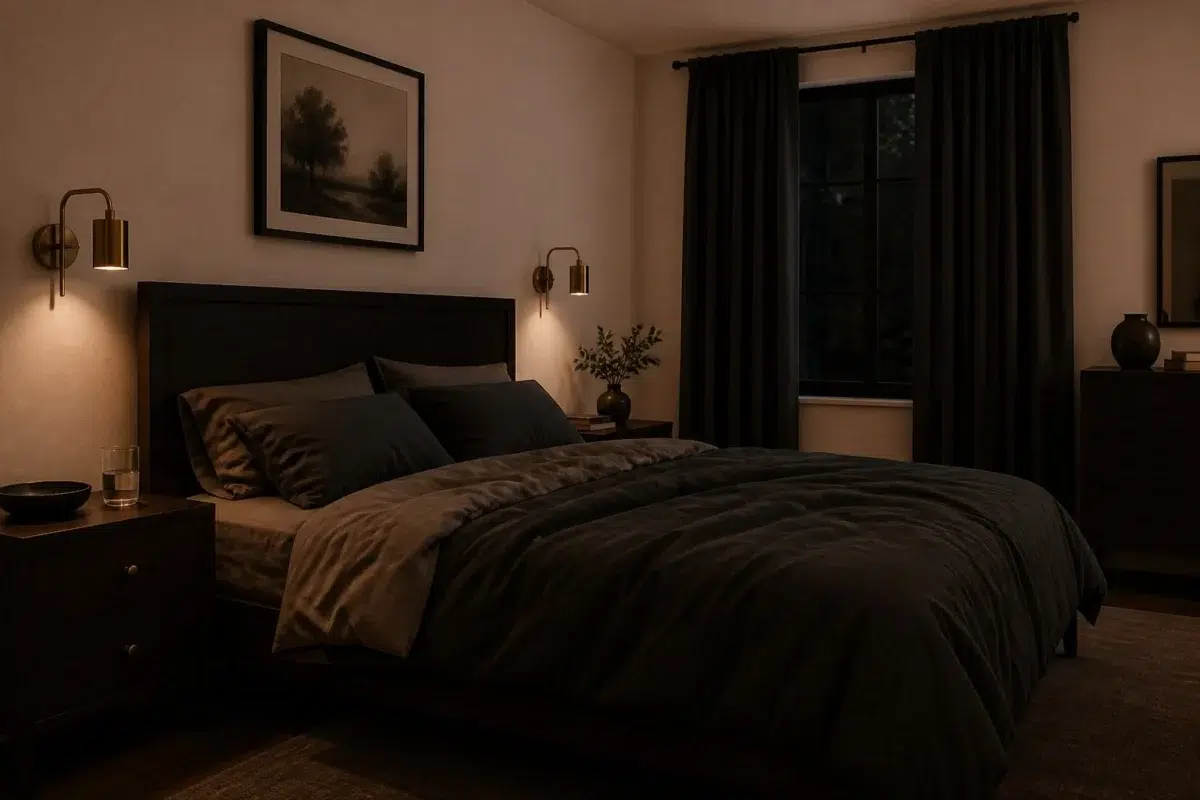
1 Bedroom Photo
Conch Shell (7115) brings its beige character into a room designed around rest, softness and retreat. Its warm classification can feel inviting beside tactile, natural materials.

A moody bedroom painted in Conch Shell
@mybudgetrecipes
1 Patio Photo
The 1 patio image turn a beige swatch into something more spatial and expressive. Its warm classification can feel inviting beside tactile, natural materials.

minimalist patio featuring Conch Shell by Sherwin-Williams
@mybudgetrecipes
1 Living Room Photo
1 living room image place Conch Shell (7115) in a space shaped by conversation, quiet evenings and changing daylight. Its LRV of 81.2 gives it a light-reflective character, though shadows and neighboring finishes can still draw out surprising depth.

A traditional living room painted in Conch Shell
@mybudgetrecipes
1 Kitchen Photo
Conch Shell (7115) moves through 1 kitchen image without becoming a fixed prescription for the room. Its warm classification can feel inviting beside tactile, natural materials.

Conch Shell — classy kitchen
@mybudgetrecipes
1 House Photo
Across 1 house image, Conch Shell (7115) meets full daylight, cloud cover and long evening shadows. Its warm classification can feel inviting beside tactile, natural materials.

Conch Shell color — scandinavian house inspiration
@mybudgetrecipes
1 Mudroom Photo
The 1 mudroom image turn a beige swatch into something more spatial and expressive. Its warm classification can feel inviting beside tactile, natural materials.

Conch Shell — earthy mudroom
@mybudgetrecipes
Expert Perspectives
Articles and features from across our network of home and design sites.
Coordinating Colors


At LRV 81 vs 26, Conch Shell is decisively the brighter choice.


Conch Shell reflects far more light (LRV 81 vs 20), opening up a space where Mulberry Silk encloses it.
Similar Colors

A 4-point LRV gap (81 vs 77) makes Conch Shell the marginally brighter of the two.


Their light reflectance is nearly identical (LRV 81 vs 79), so neither reads brighter in a room.

A 6-point LRV gap (81 vs 75) makes Conch Shell the marginally brighter of the two.

Their light reflectance is nearly identical (LRV 82 vs 81), so neither reads brighter in a room.

Conch Shell reads slightly lighter (LRV 81 vs 76), a gap that shows most in low-lit rooms.


Conch Shell reads slightly lighter (LRV 81 vs 77), a gap that shows most in low-lit rooms.


A 6-point LRV gap (81 vs 76) makes Conch Shell the marginally brighter of the two.


Conch Shell reads slightly lighter (LRV 81 vs 77), a gap that shows most in low-lit rooms.

Their light reflectance is nearly identical (LRV 81 vs 81), so neither reads brighter in a room.


A 4-point LRV gap (81 vs 78) makes Conch Shell the marginally brighter of the two.
Complementary Colors


At LRV 81 vs 52, Conch Shell is decisively the brighter choice.


At LRV 81 vs 41, Conch Shell is decisively the brighter choice.

Conch Shell reflects far more light (LRV 81 vs 22), opening up a space where Stratford Blue encloses it.


At LRV 81 vs 31, Conch Shell is decisively the brighter choice.


Conch Shell reflects far more light (LRV 81 vs 22), opening up a space where Secure Blue encloses it.


At LRV 81 vs 69, Conch Shell is decisively the brighter choice.


Conch Shell reflects far more light (LRV 81 vs 23), opening up a space where Perfect Periwinkle encloses it.
Lighter Colors
Their light reflectance is nearly identical (LRV 81 vs 81), so neither reads brighter in a room.
Darker Colors


At LRV 81 vs 54, Conch Shell is decisively the brighter choice.

At LRV 81 vs 47, Conch Shell is decisively the brighter choice.


At LRV 81 vs 53, Conch Shell is decisively the brighter choice.


A 9-point LRV gap (81 vs 72) makes Conch Shell the marginally brighter of the two.


A 12-point LRV gap (81 vs 69) makes Conch Shell the marginally brighter of the two.
Color Codes
Manufacturer description
Picture the soft, luminous interior of a seashell held up to sunlight—this delicate pale pink carries warm peachy undertones that evoke coastal calm and understated elegance. Perfect for bedrooms, bathrooms, or any sanctuary where you want to wrap yourself in gentle, nurturing warmth.